




FGD Semi-Urban Site: Shakardara

The first day of our semi-urban site did not go as planned. It all started off wrong. Everything.
Our cars were an hour late. Our female moderator threatened not to come.
(background on that: Challenge #One: Trained moderators are extremely difficult to come by here. There is, not surprisingly after so many years of war and oppression, a very real lack of trained Afghan staff who are qualified to do the kind of work the NGOs are looking for. Because there are so many NGOs, those few who are capable are already very busy and hard to come by. I spent several days and several meetings trying to identify moderators for our FGDs. Finally, the Research Coordinator at PSI made a recommendation for a male-female couple who, we were told, had experience moderating FGDs. Challenge #Two: On the day of the training, which I had designed entirely in English, we discovered that our moderators did not, in fact, speak English. On the day of the field tests, we discovered that, Challenge #Three, there was no way these people had real experience with FGDs before. The male moderator was both especially committed (he spent time at home working on rewriting the questions!) and especially lacking in skill. Because the male groups were the most important groups for our study, we had to find a new moderator at the last moment. The day before our first study site, a man from one of our grantee organizations, Dr. Ihsan, agreed to act as the moderator, despite an extremely busy schedule. We informed the original moderator that we would not be able to use his services. The day of the study, however, he showed up. When we told him again that, Thank you, but we have a different moderator, the female moderator (who has a harsh personality) said that if he did not go, she would not go. I'm not sure how we convinced her, perhaps it was an empty threat and when she realized we were going ahead, she thought better of it. Regardless, she came.)
We arrived to the clinic there to discover that no one was expecting us. This despite a confirmation the previous day that all was set and we would arrive to a staff who had been briefed, prepared to help us conduct our study without a hitch.
"I'm sorry, who are you?" It was going to be impossible to assemble complete groups this day. We did our best with the women's groups, and were able to recruit small groups of women who had delivered at the clinic. The men's groups were another story. We were extremely fortunate to have our new male moderator, Dr. Ihsan -- he was well-connected in that community and, working his connections and the respect he and his organization have earned there, he was able to set up the discussions for the next day. We would not be able to recruit from the waiting rooms as hoped, but were guaranteed to have full groups and spacious rooms at a home out in the community for the following day.
As he busied himself tending to the arrangements for us, we were invited in to share lunch with the folks from Sanayee Development Foundation, one of the civil organizations that works out in the community. We politely declined, not wanting to take advantage, but accepted some dogh -- a drink made of sour yoghurt, cucumber, and pepper. As a muslim country, Afghans don't drink alcohol -- this drink serves a similar purpose, it seems. People joke about how relaxed and sleepy you get after having too much dogh. If you joke about feeling tired after drinking a glass, you are guaranteed to get a laugh and win some points for really knowing the culture. Drunk on our dogh, we ended up accepting a bit of lunch.
On the way back to the city that afternoon, I spent a little more time talking with our moderator, who was very polite, very kind, and very informative. It was he who first told me that all of the land we pass on our way out of Kabul was once lush and green with fields and fields of grapes and fruit trees. Looking out at the dry, dusty earth and the demarcated plots of mines I felt a clutch in my chest imagining what it must be like for him, who knew the beauty and fertility this land used to be. The Taliban burned these fields, burned the villages, killed many of the remaining few villagers that had not fled north prior to the invasion of that evil regime. The air must have been thick with the smell of smoldering grapes, gunpowder, and violence. After this devastation, even the rain was afraid to return to the region, and now, after eight years of drought, little remains to remind us of what it must have looked like then.
As he looked out of the windows toward the past with me, he was reminded of his boyhood in fields like these. He smiled the smile that I have only seen Afghans give as he recollected the days he passed chasing small birds through the vineyards, the grass, with the sound of bullets zipping past his ears. He remembers that he didn't even consider it extraordinary, that he didn't then recognize the dissonance of such childish playful innocence and such adult violence and evil. There is no clever or poignant adjective or allegory to really characterize that smile, the one that accompanies such tragic memories, tragic histories, tragic todays; or if there is, I am just not clever enough to think of it.
We dropped him off with effusive thanks and I wished it were not inappropriate to give hugs. He would not be able to accompany us the next day, but he would be sure to send a well-respected and qualified colleague.
The following day, Day 2 at Shakardara was just lovely. Mr. Shirzai from SDF performed wonderfully at the male FGDs, and I had a wonderful time with the women. Instead of conducting the discussions at the clinic, the efforts of SDF the previous day paid off tenfold -- all of the men and women had been recruited ahead of time, and were waiting for us in small but comfortable rooms at Malalay House out in the village. Little girls gave me beautiful flowers -- fresh picked lavender and a bunch of other sweet smelling blooms that I didn't recognize. The women smiled at me continuously and sent their children over to me to sit with me and be touched by me. I was told that they thought I was cute and that I seemed very kind. It never ceases to amaze me how far a wide, ignorant smile carries me in foreign countries. That and my jilted, toddler-level language skills: "Thank you, thank you so much, thank you. Flowers, no? Flowers? Flowers are beautiful. Beautiful? Yes? Girl is beautiful." I'm sure this is a large part of what endears me to them.
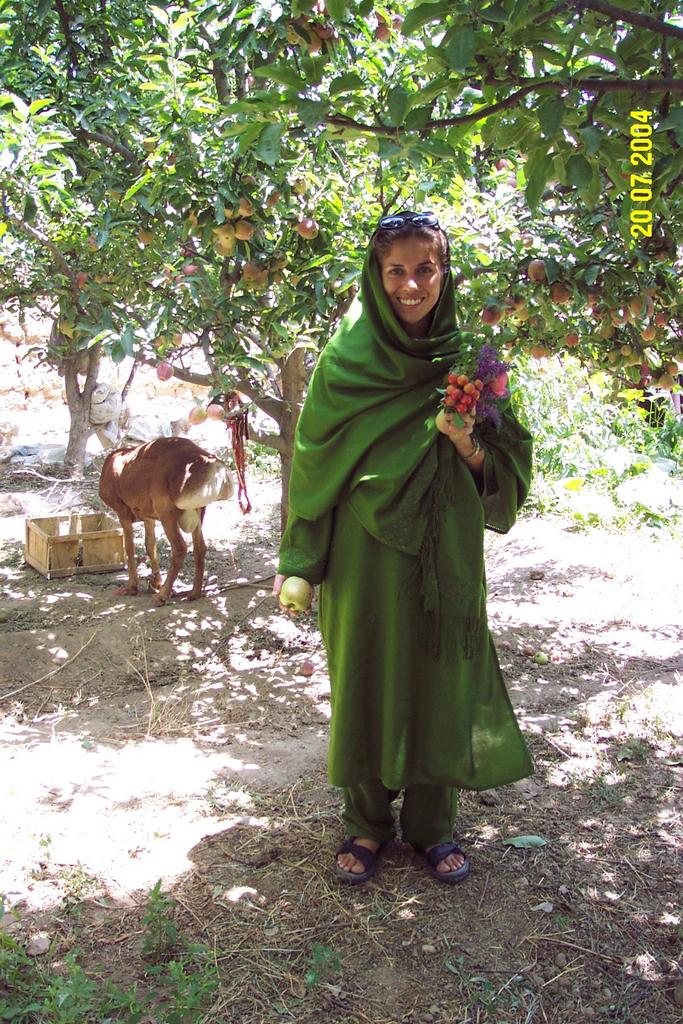
After we finished, the men were still in their groups, so we were escorted by the senior women in the village to a garden owned by one of the community leaders. "Very safe and beautiful" we were told. And indeed it was. It was an enclosed garden with rows and rows of fruit trees -- apples, especially -- and flowers and plants and the famous fat-tailed sheep.
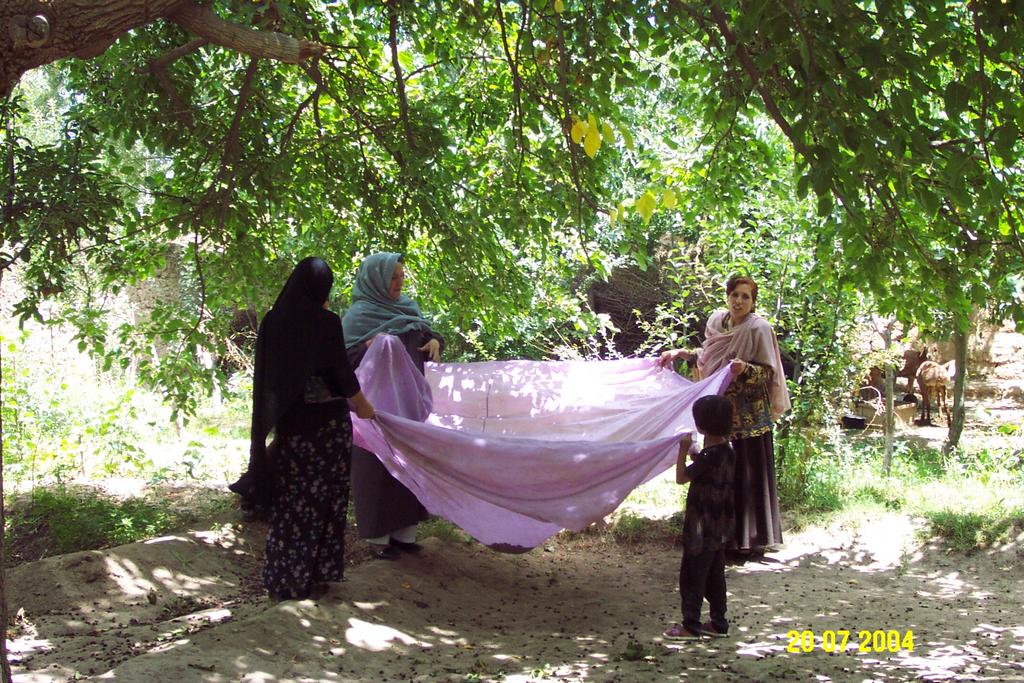 A blanket was laid for us beneath a large mulberry tree, and we wandered in and out of the trees, picking fruit, picking flowers, and breathing the fresh air. The women I was with wanted to share some mulberries with me, so two of them took up a large sheet and held it underneath while another shook the branches above with a force that surprised me. Large berries, white and purples, rained down into the sheet for our enjoyment. We sat in the shade of green trees, eating their luscious, decadent fruits, laughing and talking until our male colleagues came to fetch us.
I thought, this is what it was like before the wars began. This is the joy of being Afghan, the joy of living in this land, the joy that has sustained these people through so much and that encourages them to continue, to work, rebuild, and move forward with a gratitude that I am embarrassed to admit I too often fail to feel myself.
posted by Dr.Quel | 5:50 PM


14 Comments:
ninest123 08.15
kate spade outlet, ray ban sunglasses, true religion jeans, polo ralph lauren outlet, nike air max, nike air max, michael kors, nike free, coach factory outlet, michael kors outlet, gucci outlet, michael kors outlet, tiffany jewelry, michael kors outlet, longchamp outlet, replica watches, michael kors outlet, louboutin shoes, christian louboutin outlet, longchamp outlet, true religion jeans, coach purses, prada outlet, true religion jeans, polo ralph lauren outlet, oakley sunglasses, burberry, oakley sunglasses, burberry outlet online, ray ban sunglasses, louboutin outlet, nike outlet, tory burch outlet, longchamp, coach outlet, coach outlet, jordan shoes, michael kors outlet, chanel handbags, oakley sunglasses, prada handbags, louboutin, tiffany and co, kate spade handbags
ralph lauren pas cher, north face, north face, oakley pas cher, nike air max, lacoste pas cher, hogan, nike free, abercrombie and fitch, ray ban pas cher, michael kors, mulberry, lululemon, air jordan pas cher, nike roshe run, true religion outlet, nike roshe, longchamp pas cher, sac guess, nike trainers, nike blazer, hollister, air max, air force, louboutin pas cher, michael kors, longchamp, nike air max, ralph lauren uk, michael kors, sac longchamp, hollister pas cher, vans pas cher, burberry, nike free run uk, ray ban uk, new balance pas cher, nike air max, nike huarache, converse pas cher, tn pas cher, hermes, timberland, vanessa bruno
nike air max, herve leger, asics running shoes, new balance, instyler, north face outlet, wedding dresses, baseball bats, ralph lauren, lululemon, jimmy choo shoes, beats by dre, nfl jerseys, ghd, north face outlet, babyliss, hollister, insanity workout, hollister, chi flat iron, louboutin, valentino shoes, celine handbags, vans shoes, oakley, ferragamo shoes, soccer shoes, iphone 6 cases, giuseppe zanotti, vans, timberland boots, abercrombie and fitch, mac cosmetics, nike roshe, hollister, nike air max, bottega veneta, converse, reebok shoes, p90x workout, birkin bag, mcm handbags, mont blanc, soccer jerseys
2015-09-01 zhengjx
celine handbags
nike trainers
ray-ban sunglasses,ray ban sunglasses,ray bans,rayban,ray ban wayfarer,raybans,ray ban glasses,ray ban aviators,ray ban clubmaster,ray ban eyeglasses,cheap ray bans,ray bans sunglasses,ray ban aviator,ray bands,fake ray bans,ray ban prescription glasses,ray ban outlet,ray ban canada,ray ban sunglasses sale,ray ban sale
coach outlet store online
uggs for cheap
uggs australia
timberland outlet
copy watches
michael kors outlet online
celine outlet
burberry handbags
louis vuitton outlet
retro jordan
cheap ray ban sunglasses
michael kors outlet
gucci bags
ghd hair straighteners
longchamp sale
michael kors outlet online
oakley sunglasses
north face uk
louis vuitton handbags
mont blanc pen
coach factory outlet online
louis vuitton
ray ban aviators
jordan shoes
abercrombie
tory burch outlet online
vans sneakers
uggs for men
jordan 6 rings
michael kors uk
nike sale,nike tiempo,womens nike shoes,nike 6.0,nike factory outlet,nike acg,nike store locator
michael kors handbag
chenlina20150901
2015929dongdong
Outlet Michael Kors Sale Online
Ralph Lauren Polo Shirts Clearance
michael kors outlet online
michael kors outlet
Air Jordan 6 Champagne Bottle
true religion jeans
Jordan 4 Shoes For Sale
michael kors bags
Louis Vuitton Neverfull Tote Bag
coach factory outlet
Coach Outlet Online Discount Sale
Cheap Ray Ban Wayfarer
timberland outlet
canada goose
Abercrombie and Fitch Women's Clothing
Louis Vuitton Belts On Sale
coach outlet online
ugg outlet
michael kors uk
Louis Vuitton Outlet Free Shipping
ugg boots sale
celine bags
michael kors uk
michael kors outlet
fitflops sale clearance
Louis Vuitton Online Shop Stores
Coach Factory Outlet Clearance
Coach Luggage Bags Outlet Sale Online
louis vuitton
Montblanc Pen Refills Outlet
20151106 junda
nike air jordan
soccer jerseys
mont blanc pens
sac longchamp
cheap ugg boots
michael kors outlet
michael kors
ugg outlet
adidas gazelle
coach outlet
michael kors outlet
michael kors
ugg sale
nike uk
ray ban
air jordan pas cher
louis vuitton handbags
longchamp bags
nike trainers
juicy couture
moncler jackets
michael kors bags
cheap ugg boots
coach factory outlet
louis vuitton handbags
michael kors uk
louis vuitton
ghd hair straighteners
true religion outlet
michael kors outlet uk
moncler jackets
canada goose uk
cheap uggs
louboutin pas cher
coach outlet
toms wedges
running shoes
new balance outlet
kate spade handbags
cheap jordan shoes
michael kors handbags
ugg boots on sale
adidas wings shoes
mulberry uk
michael kors handbags
ray-ban sunglasses
celine outlet
tiffany and co
ralph lauren polo
michael kors outlet online
michael kors handbags wholesale
ray-ban sunglasses
calvin klein outlet
oakley sunglasses wholesale
oakley canada
tiffany and co
ugg boots
hollister clothing
camisetas futbol baratas
You made some good points there
http://www.prokr.net/2016/09/anti-termite-2.html
http://www.prokr.net/2016/09/anti-termite.html
air max
michael kors handbags
ray ban
asicsasics running shoes
ugg outlet store
canada goose jackets
polo ralph lauren
the north face
moncler
the north face
chenlina20180306
moncler coat
baseball jerseys
cheap jordans
air max 90
jordan 6
michael kors outlet online
kd 11
off white
louboutin shoes
coach outlet online
moncler coat
baseball jerseys
cheap jordans
air max 90
jordan 6
michael kors outlet online
kd 11
off white
louboutin shoes
coach outlet online
شركة مكافحة حشرات بالخبر
شركة مكافحة حشرات بالجبيل
شركة مكافحة حشرات بالاحساء
خدمات تلال
شركات تعقيم الشقق من الكورونا فى الفجيرة
شركة تعقيم مدارس فى الفجيرة
Post a Comment
<< Home